


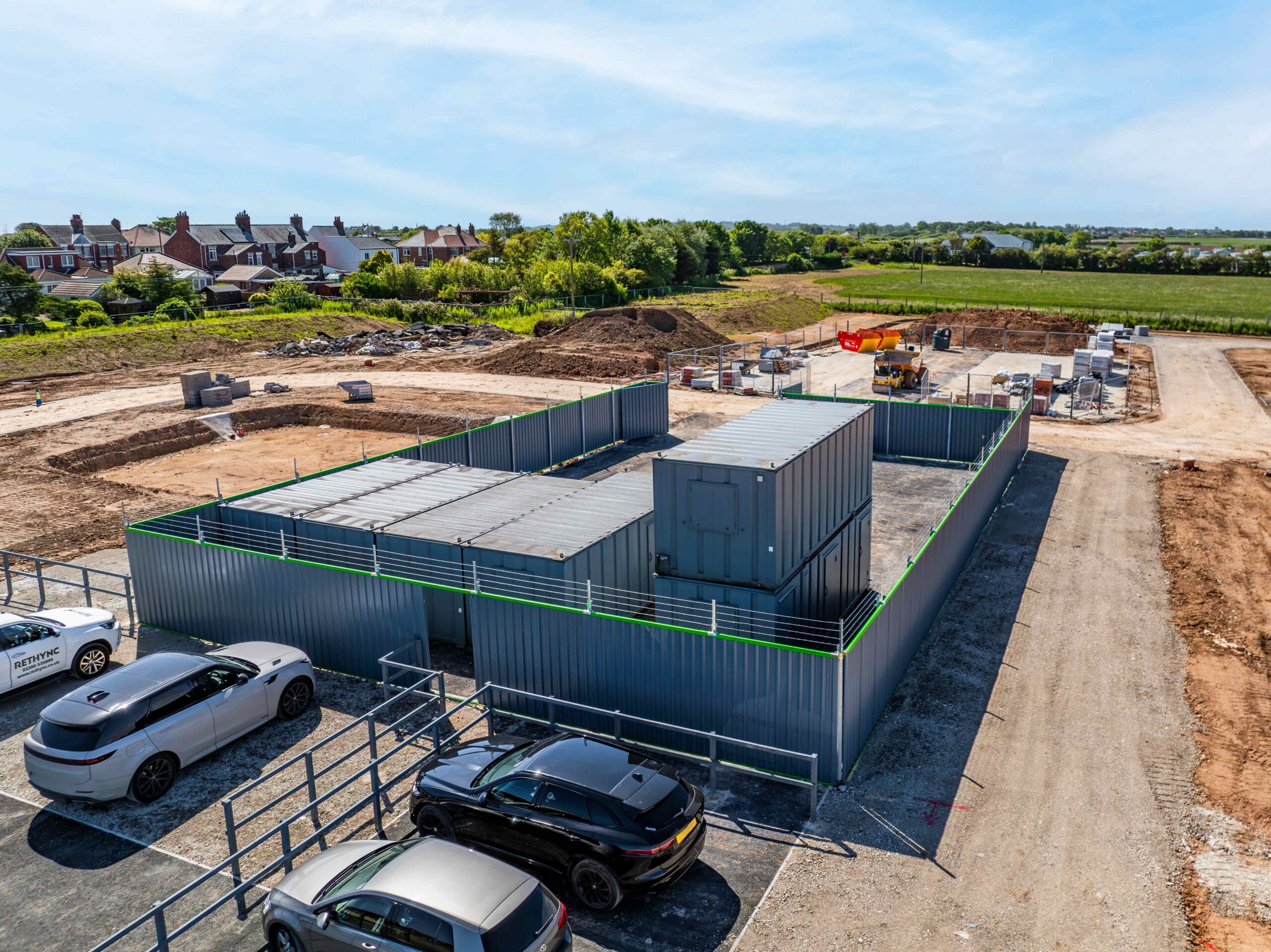
Construction hoarding is an important part of keeping building sites secure, protecting the public and creating a clear boundary around ongoing works. But what is construction hoarding, and why does the material used make such a difference?
Traditionally, many construction sites have relied on timber hoarding to create temporary boundaries. However, timber can present challenges when it comes to durability, ongoing maintenance, waste and long-term costs.
For contractors and developers looking for a more practical solution, reusable steel hoarding offers a durable alternative that can be used across multiple projects.
In this guide, we’ll explain what construction hoarding is, why it’s needed and how steel hoarding compares with traditional timber systems.
What Is Construction Hoarding?
Construction hoarding is a solid, temporary barrier installed around building sites, demolition projects and other areas where construction work is taking place.
Its primary purpose is to separate construction activities from surrounding areas, helping to prevent unauthorised access and protect workers, pedestrians and members of the public from potential hazards.
Unlike temporary mesh fencing, which allows visibility through the site boundary, solid construction hoarding provides an enclosed perimeter that can offer greater privacy and a more substantial physical barrier.
Construction site hoarding serves several important purposes:
- Site security: Helping prevent unauthorised access and protecting valuable equipment and materials.
- Public safety: Creating a physical separation between construction activities and surrounding public areas.
- Privacy: Restricting visibility into active construction sites.
- Professional appearance: Maintaining a clear and consistent boundary around developments.
- Site access management: Providing controlled entry and exit points through designated gates.
While construction hoarding is temporary, it still needs to withstand demanding site conditions throughout the duration of a project.
What Is Construction Hoarding Made From?
Construction hoarding has traditionally been constructed using timber posts, supporting rails and plywood panels. However, these materials can deteriorate when exposed to prolonged periods of rain, moisture and changing weather conditions.
Timber hoarding is also frequently built for a specific development, which can make dismantling and reusing the materials on another site difficult.
Steel hoarding provides an alternative approach.
Manufactured using robust metal panels, modern steel hoarding systems are designed to create durable site boundaries while offering the opportunity for repeated use.
What Are the Disadvantages of Timber Construction Hoarding?
Although timber has traditionally been used for construction site hoarding, it has several limitations that contractors should consider.
Weather Damage and Deterioration
Construction sites are constantly exposed to the elements, particularly in the UK, where rain and damp conditions can affect building materials throughout the year.
Timber and plywood can absorb moisture if not adequately protected, potentially leading to swelling, warping and deterioration.
Over time, this can affect the condition and appearance of the hoarding, increasing the likelihood of maintenance or replacement.
Galvanised and appropriately coated steel panels offer greater resistance to moisture-related deterioration and do not suffer from timber rot.
Ongoing Maintenance Requirements
Timber hoarding can require ongoing maintenance to remain in suitable condition throughout a development.
Weather damage, loose panels and general wear may lead to additional repairs, particularly on projects lasting several months or years.
These maintenance requirements can increase costs and create additional work for site management teams.
A purpose-designed steel hoarding system is built for demanding construction environments, helping reduce the need for frequent replacement of materials.
Limited Reusability
One of the main limitations of traditional timber hoarding is that it is often constructed specifically for an individual site.
Once the development is complete, dismantling the structure can damage boards, posts and fixings, limiting their suitability for future use.
This creates additional costs when new hoarding materials are needed for subsequent projects.
Reusable steel hoarding addresses this issue by allowing contractors to relocate existing panels between developments.
Increased Material Waste
Construction businesses face growing pressure to manage resources efficiently and reduce unnecessary waste.
Where timber hoarding cannot be reused, damaged or unwanted materials may need to be removed and disposed of when a project ends.
Repeatedly sourcing replacement materials also increases the resources required across multiple developments.
Investing in reusable steel hoarding can help reduce this reliance on single-project materials.
Why Is Steel Hoarding a Better Alternative to Timber?
When comparing steel and timber construction hoarding, it is important to consider the entire lifespan of the system rather than focusing solely on the initial installation.
Steel hoarding offers several advantages for construction businesses looking for a secure, durable and reusable site perimeter.
Greater Durability and Weather Resistance
Steel hoarding is designed to withstand the demands of active construction environments.
Galvanised and coated panels provide protection against corrosion, while their robust construction helps maintain a secure boundary throughout a development.
Unlike timber, steel does not absorb moisture, warp or rot, making it well suited to prolonged outdoor use.
Strong and Secure Site Boundaries
Security is an essential consideration when establishing a construction site perimeter.
Solid steel panels create a robust physical barrier that helps deter unauthorised access and protect materials, equipment and ongoing works.
When properly specified and installed, steel hoarding can provide reliable protection throughout a project’s duration.
For further information, read our article on site hoarding and protecting public safety.
Reusability Across Multiple Developments
One of the biggest advantages of steel hoarding is its potential for repeated use.
Unlike traditional timber installations that may need replacing when a development ends, modular steel hoarding systems can be dismantled and installed at another location.
This is particularly valuable for housebuilders, main contractors and developers managing multiple construction projects.
Instead of purchasing new hoarding materials for every site, contractors can continue using their existing system, subject to its condition and suitability for the next installation.
Better Long-Term Cost Efficiency
The initial cost of construction hoarding does not necessarily reflect its long-term value.
Traditional timber installations may involve recurring expenditure on replacement materials, maintenance and installation labour.
Reusable steel hoarding allows these costs to be considered across multiple developments rather than individual projects.
For contractors managing several sites, this can make steel a more cost-effective investment over time.
Reduced Waste and More Sustainable Site Management
Reusing construction materials is an important way to reduce waste and improve resource efficiency.
A reusable site hoarding system can remain in service across multiple developments, reducing the need to manufacture and purchase replacement panels for each project.
Steel can also be recycled at the end of its useful life.
By choosing a system designed for repeated use, contractors can work towards reducing unnecessary material consumption and waste.
What Should You Consider When Choosing Temporary Site Hoarding?
Choosing temporary site hoarding involves more than selecting a material. Contractors should also consider the requirements of the development and how the boundary will perform during construction.
Site Security and Public Safety
Construction sites must be appropriately secured to prevent unauthorised access and protect surrounding areas.
The hoarding specification should reflect the risks associated with the site, its location and the level of public access nearby.
A suitable installation should also account for access gates, fixings and the overall integrity of the perimeter.
Project Duration
Longer developments require hoarding that can remain in service over an extended period.
Durable steel systems can help reduce the need for replacement materials during prolonged projects.
For contractors with several developments planned, reusable hoarding also offers the opportunity to retain materials for future use.
Ground Conditions and Weather Exposure
Ground conditions, gradients and wind exposure can all affect the suitability and installation of construction hoarding.
Solid panels can be subject to significant wind loads, making appropriate design and secure installation essential.
For sites with changes in ground level, adaptable systems can help accommodate the layout while maintaining a continuous boundary.
Read more about site hoarding for uneven ground.
Long-Term Costs and Reusability
Rather than considering only the cost of the initial installation, contractors should assess the overall investment required across multiple projects.
Factors such as maintenance, dismantling, storage, transportation and reinstallation can all influence the total cost.
A reusable steel system can offer better long-term value by reducing the need to continually replace hoarding materials.
Rethync’s Reusable Steel Construction Hoarding
At Rethync, we provide durable, reusable steel hoarding solutions designed to meet the demands of construction projects across the UK.
Our Multisite Hoarding system uses 1-metre-wide galvanised and poly-coated steel panels to create a strong, secure and professional site perimeter.
Designed for repeated use, the system can be dismantled, relocated and reinstalled across multiple developments, helping contractors reduce material waste and achieve long-term value.
Key features of Rethync’s Multisite Hoarding include:
- Durable construction: Heavy-duty steel panels designed to withstand demanding site conditions.
- Reusable design: Panels can be relocated and installed across multiple construction projects.
- Flexible installation: Suitable for varying site layouts, including gentle curves and gradients.
- Space-efficient system: No backstays required, helping preserve usable space within the site compound.
- Professional finish: Powder coated white on one side as standard, with optional colours and finishes.
- Customisable specifications: Supplied at a standard height of 2.4 metres, with additional security configurations available.
- Nationwide service: Supply, delivery and installation for construction projects across the UK.
Whether you’re managing a housing development, commercial construction project or civil engineering site, Multisite Hoarding provides a robust alternative to traditional timber installations.
Looking for Reliable Construction Site Hoarding?
Understanding what construction hoarding is and how different materials perform can help contractors make better decisions about their site boundaries.
While traditional timber hoarding can present challenges with weather damage, maintenance and limited reusability, steel hoarding provides a durable, secure and practical alternative.
Explore our Multisite Hoarding solutions or contact our team to discuss the requirements of your next project.