


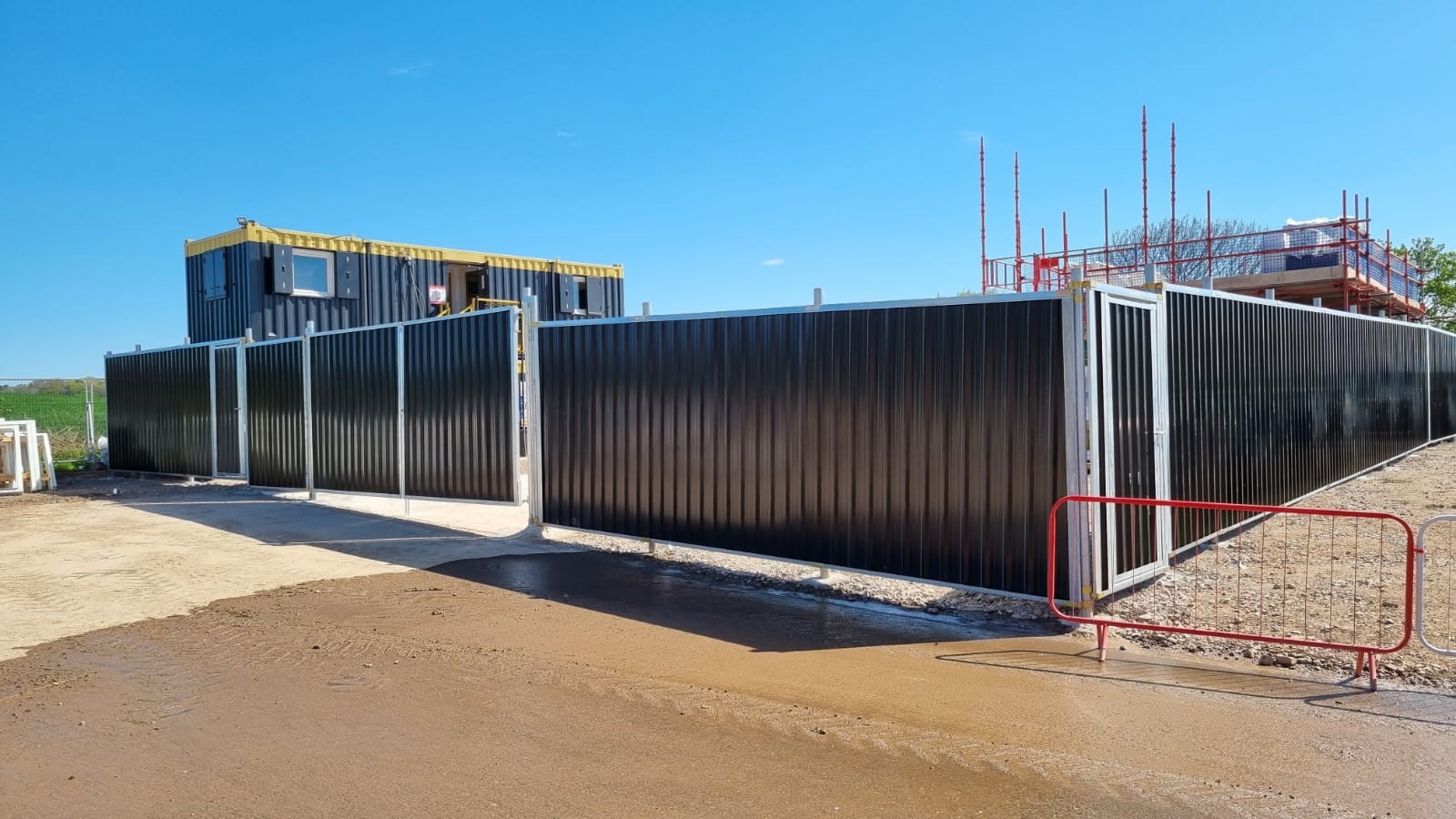
Building site hoarding plays a crucial role in ensuring safety, privacy, and legal compliance on construction sites. In the UK, contractors and housebuilders must follow specific regulations when installing hoarding. Failing to comply can lead to fines, project delays, or even site shutdowns. In this blog, we explain why understanding and following building site hoarding regulations is essential for a safe and efficient construction site.
What Is Building Site Hoarding?
Site hoarding is a temporary structure used to enclose and secure a construction site. It ensures safety and privacy for workers and the public. As a physical barrier, it prevents unauthorised access and helps contain dust, noise, and debris, minimising the impact on the surrounding area. Hoarding ensures site safety meets legal requirements, and reduces disruption.
You must comply with construction hoarding legal requirements to avoid fines and legal issues. Several types of hoarding, such as mesh, solid, and acoustic, serve different needs. Mesh hoarding allows visibility while maintaining security, while solid hoarding offers complete privacy and protection.
Key Building Site Hoarding Regulations You Must Follow
When planning a construction project, you must ensure compliance with building site hoarding regulations to maintain site safety and legal standards. Below are some key regulations you need to follow:
- Hoarding Planning Permission: First, you need to obtain the necessary hoarding planning permission from your local authority. This ensures that your hoarding meets all construction hoarding legal requirements and zoning regulations.
- Health and Safety Compliance: Your hoarding must be designed to minimise risks to workers, passersby, and the public. It should follow site safety hoarding regulations to prevent accidents.
- Security Measures: Ensure that you incorporate adequate lighting, access control, and security features into the hoarding. These measures protect the site and surrounding areas from theft and vandalism.
- Clear Signage: You must install clear signage that includes hazard warnings and relevant site details. This helps inform the public about potential dangers and ensures safety compliance.
By following these construction hoarding legal requirements, you maintain a secure and legally compliant construction site, protecting both workers and the surrounding community.
Why Compliance with Hoarding Regulation Matters
Compliance with building site hoarding regulations is vital for several reasons. First, failing to meet construction hoarding legal requirements can result in fines, legal issues, and delays. It also ensures site safety hoarding regulations are met, protectingworkers and the public.
Additionally, environmental considerations are also important. Certain materials and construction methods must comply with local regulations to minimise the impact of a project. Therefore, by securing hoarding planning permission and following site safety hoarding regulations, you’re ensuring a safer, more efficient site for everyone.
Penalties for Non-Compliance
Failure to comply with building site hoarding regulations can lead to costly penalties. For example, not obtaining the necessary hoarding planning permission or failing to meet construction hoarding legal requirements may result in fines. Non-compliance with site safetyhoarding regulations can also lead to penalties, especially if the hoarding fails to protect workers or the public.
In extreme cases, repeated violations may cause delays, shutdowns, or lawsuits, further increasing financial strain. Therefore, it’s essential that you meet all regulations to avoid these consequences.
How to Ensure Your Site Hoarding is Regulation-Compliant
To ensure that your site hoarding complies with all relevant regulations, follow these steps:
- Choose a Reliable Supplier: Work with a supplier who understands building site hoarding regulations. A trusted supplier ensures the hoarding meets construction hoarding legal requirements and follows site safety hoarding regulations.
- Consult with Experts: Consult a site safety expert to navigate site hoarding compliance. Experts ensure your hoarding meets safety and legal standards.
- Obtain Hoarding Planning Permission: Always obtain hoarding planning permission from your local authority before installing hoarding. This ensures compliance with local laws.
By working with experts and trusted suppliers who know site hoarding regulations, you can ensure a smooth, compliant construction project from start to finish.
For your next construction site project, consider partnering with Rethync for all your site hoarding, fencing, and gate needs. We offer solutions that guarantee full compliance with all building site hoarding regulations. Contact us today!