


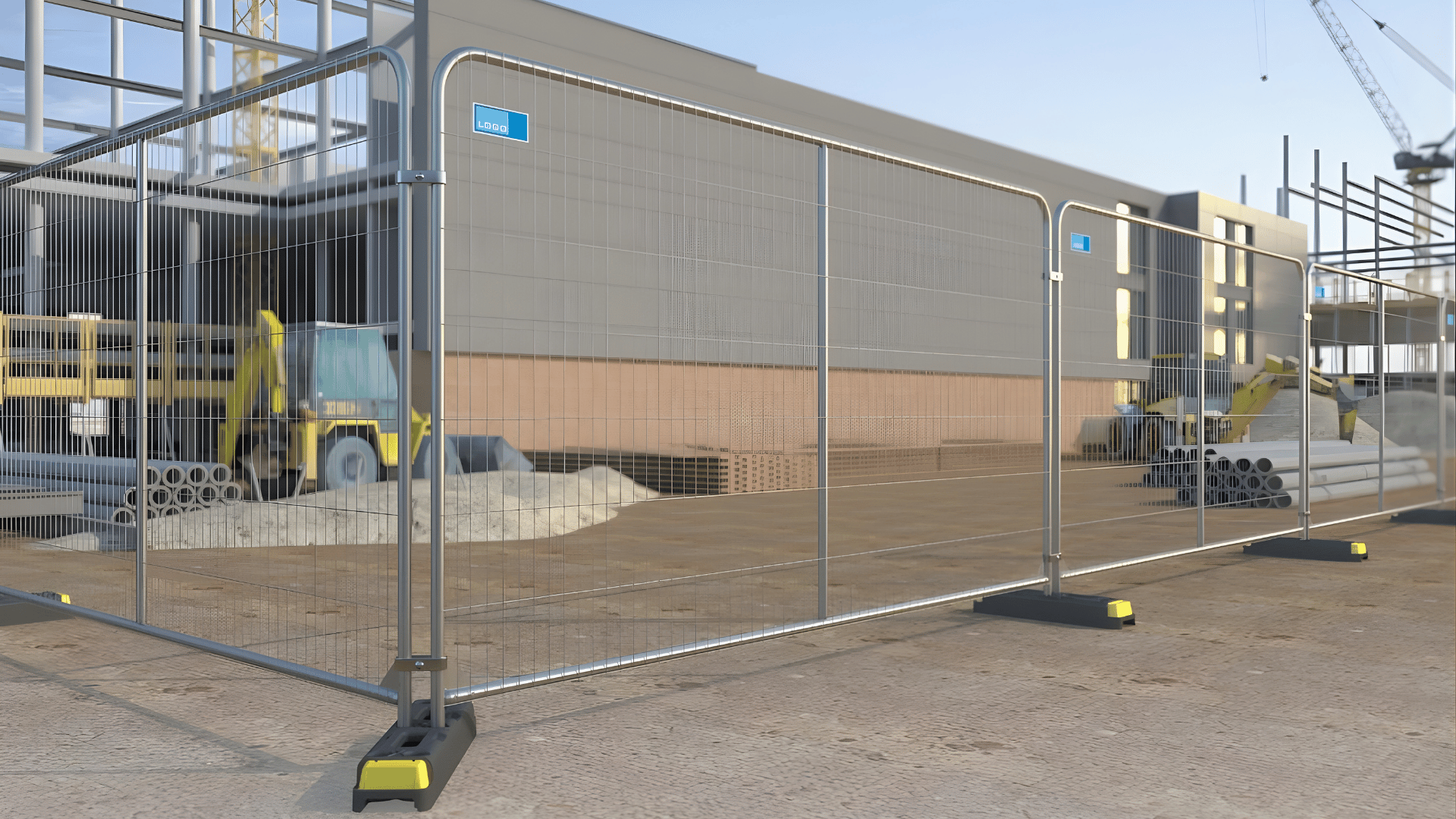
Temporary fencing plays an important role on construction sites, infrastructure projects and other temporary work areas. It helps define the site boundary, control access, separate pedestrians and vehicles, protect materials and equipment, and reduce the risk of unauthorised access.
But choosing temporary fencing is not simply a case of ordering enough panels to cover the perimeter.
Different sites require different levels of security, privacy, access control and stability. The ground conditions, duration of the project, wind exposure and location of pedestrian and vehicle access points can all influence which type of temporary fencing is most suitable.
From standard mesh panels and temporary fence gates, to secure anti-climb systems, understanding the options available can help you create a safer site perimeter.
What are the main types of temporary fencing?
There are several temporary fencing systems commonly used across UK construction sites.
The right solution will depend on the site itself, the surrounding environment and what the fencing needs to achieve.
Temporary mesh fencing
Temporary mesh fencing is one of the most widely used options for construction sites.
Typically manufactured from galvanised steel, mesh panels provide a practical perimeter that can be installed relatively quickly and repositioned as the site develops.
Standard temporary fencing panels are commonly around two metres high, with many systems using panels approximately 3.5 metres wide.
Their open mesh construction allows visibility through the perimeter while helping prevent unauthorised access.
Mesh fencing is particularly useful for:
- Construction site boundaries
- Short and medium-term projects
- Internal site segregation
- Utility works
- Infrastructure projects
- Events and temporary work areas
One of the biggest advantages is flexibility. If the site layout changes, sections of fencing can usually be moved without completely rebuilding the perimeter.
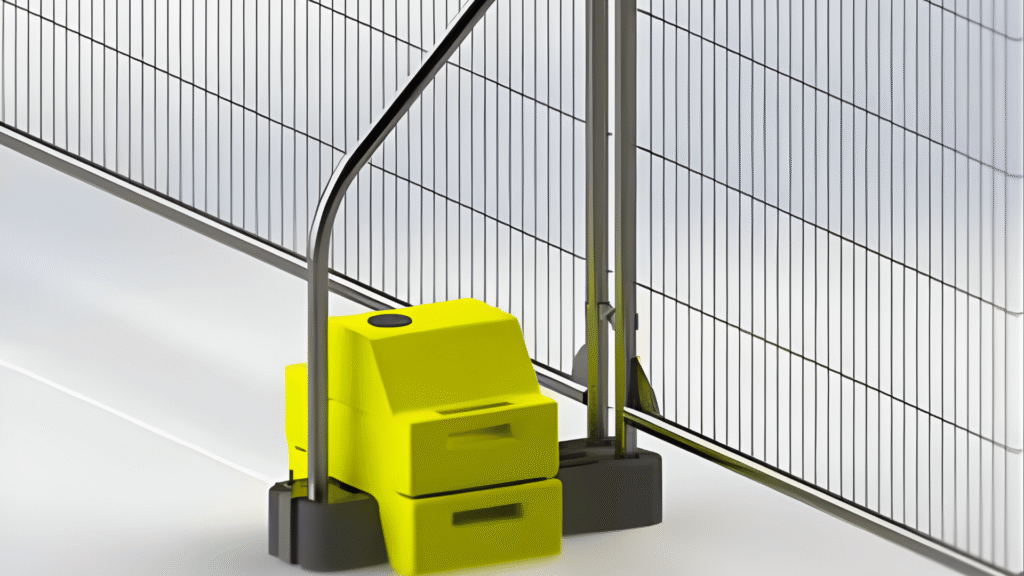
Temporary mesh fencing can be installed using suitable fencing feet or blocks, or fixed to timber posts where a more established installation is required.
Anti-climb temporary fencing
Where security is a greater concern, anti-climb mesh fencing may be more appropriate.
These panels use smaller mesh apertures designed to make it harder to gain a foothold or handhold on the fencing. Additional security accessories can also be incorporated, including anti-tamper couplers and anti-lift devices.
This type of fencing can be particularly useful on sites containing valuable plant, materials or equipment, or where the site is located close to public areas.
The fencing itself is only one part of the solution. Gates, couplers, bases and other accessories should all provide an appropriate level of security for the site.
Temporary mesh fencing on timber posts
Temporary mesh panels do not always need to be installed using freestanding blocks. For longer-term projects, mesh fencing can also be installed against timber posts.
It may be useful where a boundary is expected to remain in the same position for a substantial part of the construction programme, or where site conditions make conventional fencing feet less suitable.
Ground conditions, post installation and anticipated loads should still be considered when deciding on the correct installation method.
Pedestrian and crowd control barriers
Pedestrian barriers are another form of temporary fencing, although they serve a different purpose.
They are primarily designed to guide pedestrian movement, create temporary walkways, manage queues or keep people away from specific work areas. They can be useful around construction entrances, events and temporary work zones.
However, pedestrian barriers should not normally be treated as a replacement for a secure construction site perimeter where preventing unauthorised access is required.
The level of protection provided should always match the risk presented by the site.
Choosing the right temporary fence gate
Access needs to be considered at the same time as the perimeter itself.
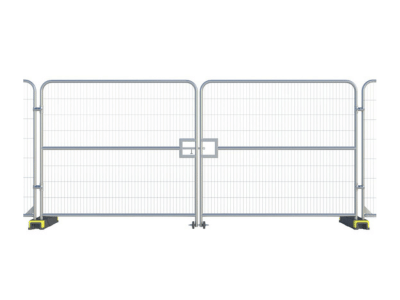
A temporary fence gate provides a defined entry and exit point without requiring site teams to repeatedly remove fencing panels.
Depending on the project, this may include separate access for pedestrians and vehicles.
Pedestrian gates
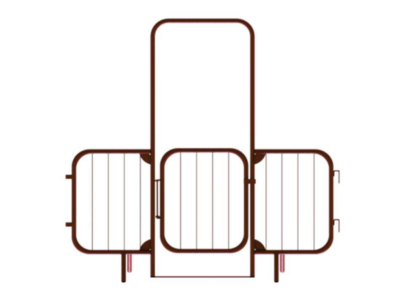
Pedestrian gates can help create a clearly controlled route for employees, contractors and visitors entering the site.
Separating pedestrian access from vehicle movements where practicable can also make the entrance easier to manage.
The gate should integrate properly with the surrounding fencing and include suitable locking or access control arrangements where required.
Vehicle gates
Vehicle gates provide wider openings for deliveries, plant and construction traffic.
Temporary mesh systems can typically accommodate vehicle gates around four metres wide, while larger steel hoarding gate systems can offer wider access depending on the project requirements.
When choosing a vehicle gate, consider:
- The size of vehicles using the entrance
- The frequency of deliveries
- Available space
- Vehicle turning requirements
- Pedestrian movements
- Gate security
- Ground conditions around the entrance
Swing gates require enough space for the gate leaves to open safely.
Where space is restricted, alternative arrangements such as sliding gate systems may sometimes be more suitable.
Gates should also be considered as part of the overall temporary fencing design. Creating a large opening in the perimeter can change how adjoining fencing needs to be supported.
Why does in-house manufacturing matter for temporary fencing?
The performance of temporary fencing starts long before it arrives on site. The way fencing, gates and associated components are designed and manufactured can have a significant impact on how well the finished system suits the project.
At Rethync, many of our fencing and gates are designed and manufactured in house, giving us greater control over materials, dimensions, specifications and quality throughout the production process.
This means we can provide solutions tailored to individual project requirements rather than relying solely on standard, off-the-shelf products.
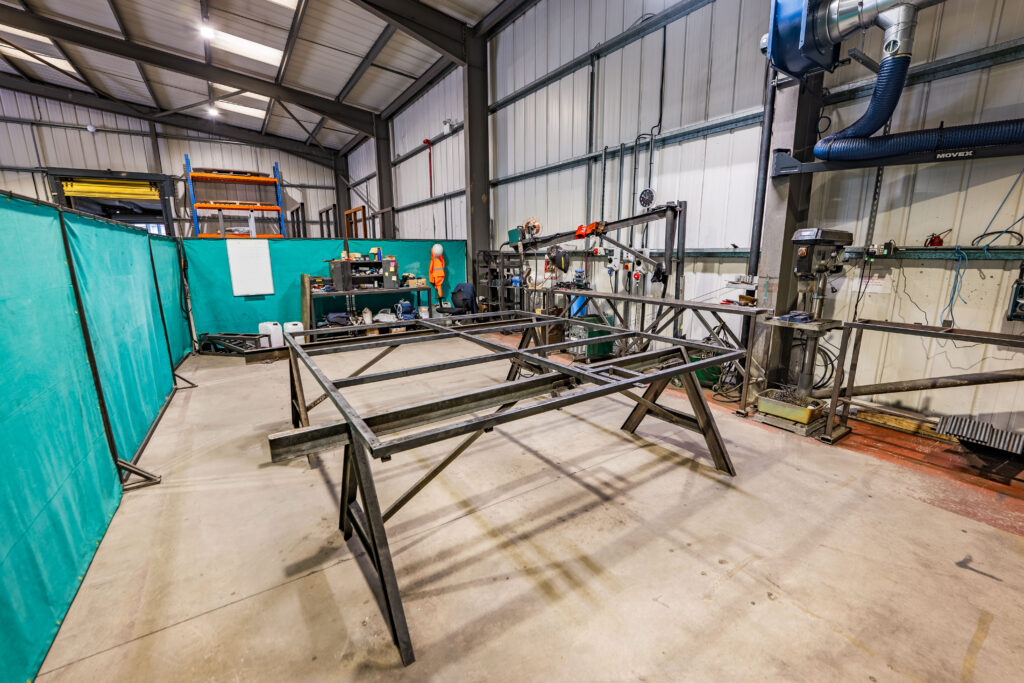
The benefits of in-house manufacturing include:
- Greater control over materials, dimensions and product quality.
- Bespoke fencing and gate solutions for specific site requirements.
- Reduced reliance on third-party suppliers.
- Greater control over lead times and project scheduling.
- Custom finishing and branding options where required.
For projects with unusual dimensions, specific access requirements or tight programmes, having this flexibility can make it easier to specify a fencing and gate system that works for the site from the outset.
Keeping manufacturing in house also means specifications can be considered alongside the wider perimeter requirements, helping create a more coordinated solution for temporary fencing, gates, hoarding and site access.
Temporary fencing works design: when is it needed?
Temporary fencing is often seen as a relatively simple site product, but from a temporary works perspective there can be more to consider.
The Health and Safety Executive includes site fencing and hoarding within the wider category of temporary works. That means the completed system should be appropriate for the loads and conditions it can reasonably be expected to experience.
When considering temporary mesh fencing, factors can include:
- Local wind exposure
- Ground conditions
- Fence height and configuration
- Length of uninterrupted fence runs
- Changes in direction
- Fencing bases
- Ballast requirements
- Bracing
- Ground anchors or pins
- Pedestrian and vehicle gates
- Nearby buildings or structures
- Project duration
- Additional coverings or screening
Not every straightforward temporary fencing installation will require bespoke engineering calculations.
However, more exposed, unusual or heavily loaded arrangements may require temporary works design input to confirm how the system should be supported.
Rethync can provide temporary works calculations for fencing, hoarding and barriers, considering factors such as system configuration, wind loading, ground conditions, anchoring and base weights. This allows the temporary perimeter to be considered as a complete system rather than simply a collection of individual panels.
Be careful when adding banners or screening
One common change to temporary mesh fencing is the addition of banners, printed graphics, debris netting or privacy screening.
While these can improve site appearance or provide additional privacy, they can also significantly change how the fencing reacts to wind.
Open mesh allows much of the wind to pass through the panel. Adding solid or semi-solid material reduces this airflow and increases the pressure acting on the fencing.
Additional bracing, ballast or a different support arrangement may therefore be required. This should be considered before materials are attached to an existing fence line, particularly on exposed sites.
Temporary fencing and site security requirements
Construction sites should take reasonable steps to prevent unauthorised access.
The appropriate level of perimeter protection depends on the site, its location and the risks present.
HSE guidance notes that in populated areas, a two-metre-high small mesh fence or hoarding will typically provide an appropriate form of site boundary, although the specific solution should always reflect the circumstances of the project.
Security can also be improved through:
- Anti-climb mesh
- Secure access gates
- Anti-tamper couplers
- Anti-lift devices
- Suitable locks
- Regular perimeter inspections
- Appropriate lighting and access control
The area immediately around the fence also matters.
Materials, skips or equipment positioned close to the perimeter can potentially provide climbing aids, reducing the effectiveness of the fencing.
What about temporary fencing on the highway?
Construction boundaries do not always remain entirely within private land.
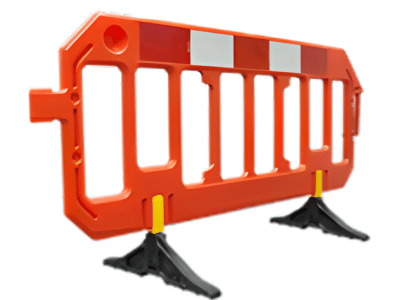
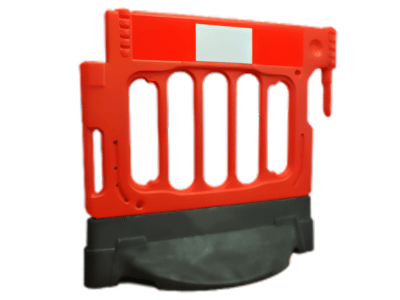
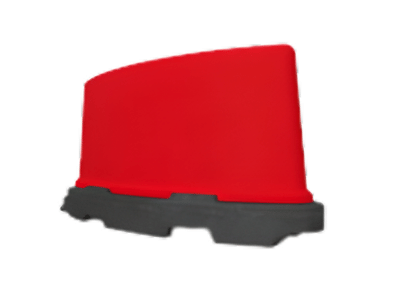
If temporary fencing or hoarding needs to occupy part of a pavement, road or other public highway, additional requirements may apply. Local highway authorities can require licences or permissions before fencing or hoarding is installed on public land.
Requirements vary between authorities, so this should be checked during the planning stage rather than once installation has already started. Pedestrian routes, visibility, access to utilities and the amount of remaining footway can all affect what is permitted.
How do you choose the right temporary fencing system?
There is no single fencing type that works for every construction site.
A relatively straightforward project may only require temporary mesh panels, suitable fencing bases and controlled pedestrian and vehicle access. A busy city-centre development may benefit from solid steel hoarding for greater security and privacy.
A longer-term boundary may be better suited to mesh fencing installed on timber posts. A higher-risk site may require anti-climb mesh, anti-tamper accessories and stronger access controls.
Before choosing a system, consider:
- What the perimeter needs to protect
- The level of public exposure
- Site security risks
- Ground conditions
- Wind exposure
- Project duration
- Pedestrian access
- Vehicle access
- Privacy requirements
- Whether screening will be attached
- How the site layout will change
- Temporary works requirements
The most suitable solution is the one that considers the entire perimeter rather than focusing on the fence panels alone.
Temporary fencing solutions from Rethync
At Rethync, we provide temporary fencing and site security solutions for construction projects across the UK.
Our range includes temporary mesh fencing, mesh fencing on timber posts, pedestrian and vehicle gates, temporary fencing accessories and site hoarding solutions.
Where additional engineering input is required, we can also provide temporary works calculations to help determine appropriate configurations, ballast, anchoring and support requirements.
Get in touch with the Rethync team to discuss your temporary fencing requirements.